Five of our Workplace Wellbeing Ambassadors reflect on their achievements and share their insights after 12 months of integrating wellbeing into their faculties and departments through the WWA program.

For five years now, we have been welcoming faculty and staff from across UBC to volunteer as Workplace Wellbeing Ambassadors (WWAs). Applications are now open for the 2025/26 cohort, and we encourage everyone to consider taking on the role for a year (or more!)... but what is it like to be a WWA? Why volunteer your time for wellbeing?
We spoke with a lecturer, a research coordinator, a technician, a program manager, and a career development specialist to learn more about their WWA experiences. Maybe they will inspire you to apply!
Sarika Bose | Lecturer | Department of English Language & Literatures | UBC Vancouver

Why did you decide to become a WWA?
I decided to become a Workplace Wellbeing Ambassador because the workplace and the world around us has been feeling increasingly unsafe. I appreciate the opportunity to create a safe, uplifting, joyful, supportive space, and community for my colleagues — whether they are tenured or untenured faculty or staff. I believe an atmosphere of kindness and joy can only strengthen the workplace.
What’s one wellbeing idea or initiative you brought to your unit? What impact did it have?
I received a small grant to put on a Workplace Wellness Day in my unit. I brought in a MoveU student to do a 15-minute movement session to warm everyone up for the day, and a Mindfulness and Meditation facilitator to lead a 45-minute session.
I transformed the department’s usual meeting room with tapestries and candles, and set up a Poetry Pharmacy and Joke Apothecary from which people were “prescribed” poems to inspire and jokes to cheer them. I also set up a craft station where attendees could try some papercraft skills and make bookmarks to take home. A modest lunch was served on silver platters, and time was built in for people to chat and connect with each other. Attendees from that day still talk about it and ask for another, similar event for the coming year. The biggest impact on them was the care for their wellbeing; this was made evident in the attention to details to create a special experience that made them feel valued.
What did you enjoy most about being a WWA?
This role allowed me to provide wellbeing experiences, such as a dog petting visit from P.A.W.S., to my community and expand my ability to support my colleagues, particularly in precarious faculty positions. I enjoyed seeing people relax and feel they were cared for and appreciated. I also enjoyed the opportunities to connect with other WWAs, particularly during the MoveU walks organized throughout the year. I was encouraged to see so many people across the campus who were committed to the everyday wellbeing of their colleagues.
If you could describe WWA in 3 words: Fulfilling, Meaningful, Impactful
Why did you decide to become a WWA?
In my roles as Chair of the UBCFA Contract Faculty Committee, and of the CAUT CAS Committee, as a founding member of the Lower Mainland Coalition of Contract Faculty and a Member of the International Board of COCAL (Coalition of Contingent Academic Labour) over the last 10 years, I have particularly enjoyed bringing people together who have felt isolated, unappreciated and unseen, to make them feel part of a community, on this campus and nationally. I welcomed the opportunity to continue and extend this kind of care for a broad range of colleagues at UBC.
What workplace wellbeing strategies do you use?
I try to pay attention to the faces and body language of people walking in and out of the buildings I use. My go-to technique is to carry chocolates with me at all times, and when I see someone drooping with tiredness, or when I see them looking stressed, I stop them and give them a chocolate. The surprised smiles I get as they pause for a few seconds to accept their chocolates, and realize I’ve seen how they are doing that day give me so much joy. No one’s refused a chocolate yet – but if they don’t eat chocolates, I have small packets of tea, too.
Next year, I might also add silly temporary tattoos or toys to my wellness bag. If someone I know looks upset, I offer to go for a coffee or take them for a walk, and try to offer some practical action, however small, to support them.
Finish the sentence: “You should apply to be a WWA if you...” want to enable your workplace to be a joyful and considerate community.
Rachel Hussey | Career Development Specialist | Academic and Career Development | UBC Okanagan
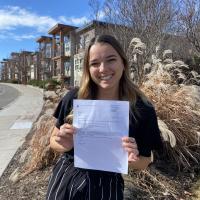
Why did you decide to become a WWA?
I decided to become a WWA because I know the feeling of being encouraged, supported and psychologically safe in the work place. I know what it means to feel like you can lean on your team. That feeling is something I never take for granted and wish to create more atmospheres like that within the UBC Okanagan community. I love getting to create more spaces of connection and community with the people we spend many of our days alongside.
What’s one wellbeing idea or initiative you brought to your unit? What impact did it have?
As a side project to my full time role, I ran a concert fundraiser outside of the office with the intention of raising awareness for mental health. The concert featured one of the very talented musician's in my office and I invited my whole department. Although I invited individuals from the community outside of UBCO as well the main audience consisted of my department and other supporters within the UBCO community. The impact was immense as my colleagues and I danced, sang and engaged with each other outside the office in a space where mental health awareness was at the core!
What did you enjoy most about being a WWA?
One of the things I enjoyed most about being a WWA was learning from the other ambassadors! Everyone had so many wonderful ideas to incorporate into my own practice. It was so special getting to gain a new lens of community and wellness by just getting to engage with so many like minded individuals across campus.
If you could describe WWA in 3 words
SO MUCH FUN! (my second answer is meaningful, impactful, and motivating)
Devin Clemens | Graduate Programs Manager | Vancouver School of Economics | UBCV

Why did you decide to become a WWA?
I have always been a proponent of the positive impacts of good team dynamics; the wellbeing initiatives promoted and supported by the ambassador program seemed an excellent way to improve our team dynamic. I also believe learning is a fundamental part of leading in that process, and I felt that being a WWA would connect me with like-minded peers who could share their insights and expand on my existing approaches to wellbeing in my teams.
What’s one wellbeing idea or initiative you brought to your unit? What impact did it have?
I established an ongoing wellbeing initiative and committee within the unit. We work towards improving the overarching wellbeing of students, faculty, and staff. It includes a yearly comprehensive survey aimed at improving wellbeing through improvements to unit policies and access to resources, as well as a number of events throughout the year, including an internal competition that supplements the Walk for Joy for all our students, faculty, and staff.
What personal or professional skills have you gained or strengthened through this program?
The program brings together like-minded wellbeing ambassadors who have a multitude of ideas for how to approach wellbeing. I have benefited from them by shifting some of my perspectives on how to best achieve wellbeing. I also further developed my soft skills by being a better listener to understand the nuanced needs of the team.
What did you enjoy most about being a WWA?
Being a part of a community that continually strives to make the workplace a better environment for all and look forward to continuing in that mission as a WWA next year.
What workplace wellbeing strategies do you use?
We have done a fair bit of work on developing more effective communication by having workshops and team discussions on it. We also try to maintain a balanced working environment to prevent stress and burnout by being intentional about taking breaks, often taking walks together or having social check-ins, as well as supporting each other during peak periods.
If you could describe your WWA experience in three words, what would they be?
Community, learning, and support.
Finish the sentence: “You should apply to be a WWA if you...”
Are passionate about improving the wellbeing of your team and making UBC an amazing place to work.
Chris Seib | Technician | School of Engineering | UBCO
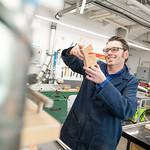
Why did you decide to become a WWA?
Honestly, it wasn’t on my radar at all until my manager asked me if I was interested and it seemed like a good way to ensure my team (which sometimes feels unnoticed or unappreciated) was included in any wellbeing initiatives because I appreciate the importance of acknowledging wellbeing and addressing it consistently.
What’s one wellbeing idea or initiative you brought to your unit? What impact did it have?
I was able to secure a small grant which I used to host a team breakfast (in conjunction with our manager who supports these initiatives), it was wildly successful and it felt really good to see my team relaxing, being silly and enjoying a free meal.
What personal or professional skills have you gained or strengthened through this program?
I haven’t really developed any completely new skills but I’ve really refined my ability to get everyone around me to think about their own personal wellbeing.
What did you enjoy most about being a WWA?
Getting to watch my teammates laugh, smile and outwardly exhibit happiness as that’s not entirely natural to this group of technical workers.
What workplace wellbeing strategies do you use?
Awareness, asking questions, listening. If it seems like someone is feeling a bit out of sorts one day – ask them if everything is ok (and really mean it) and if they’re ready to talk, listen (if you’re prepared to) or help them find an outlet
If you could describe your WWA experience in three words, what would they be?
Have an impact
Finish the sentence: “You should apply to be a WWA if you...”
Want to help those around you learn to acknowledge wellbeing and it’s importance
Somaya Iqubal | Research Coordinator | School of Population and Public Health | UBCV

Why did you decide to become a WWA?
When I first learned about the WWA program, it felt like a perfect alignment with my values and beliefs. I see the role of a WWA as a vital connector within the larger ecosystem of policies, advocacy, workplace safety, and workforce well-being. While systems and frameworks are often in place to support employees, what’s frequently missing is someone to activate, reinforce, and humanize those supports—to make them visible and accessible in everyday work life.
Becoming a WWA gave me the opportunity to be that engine within our work space – in my small ways, I try to be that steady presence that fosters awareness, holds space for dialogue, and build meaningful connection. I strongly believe that connection and a sense of belonging at work are foundational to both individual and organizational health.
As Jan-Emmanuel De Neve, professor at Oxford University, shared at the World Economic Forum, positive social connections are a leading driver of employee happiness and retention. That deeply resonates with me—and it’s what I hope to cultivate in my role as a WWA.
What’s one wellbeing idea or initiative you brought to your unit? What impact did it have?
Together with my colleague Misha, I helped start an art club called OEH Art Eve—a creative space for our Occupational and Environmental Health (OEH) department. What began as a small initiative has grown into a welcoming group that attracts people from across campus and even outside our unit. We meet every Thursday after work to talk, paint, unwind, and share. It’s become a form of catharsis—offering a space to reflect on life and work, vent, and simply listen to one another. Recently, with support from our colleague Matty, we’ve added photo walks to our activities using film camera. We’re fortunate to have strong support from our leadership, which makes this even more meaningful.
In addition, our team also benefits from a Lunch & Learn series, initiated by our department head, Professor Hugh Davies. Every two weeks, we come together over lunch to share updates on our projects. This simple but powerful practice has encouraged cross-learning and team cohesion. What stands out most to me is that it was championed by leadership—setting a strong example for how to foster open communication, psychological safety, and a culture of continuous learning.
Both initiatives reflect what I value most in workplace well-being: genuine connection, shared spaces, and leadership that models care and curiosity. Together, they are helping us grow not just as professionals, but as a more supportive, engaged team.
What workplace wellbeing strategies do you use?
I strongly believe that mental and physical health are deeply interconnected, and one of the most effective strategies is integrating both into simple, daily routines. One practice that’s worked well for me is taking short walking breaks together with our team—whether it’s stepping out to grab a coffee or lunch. These walks aren’t just about getting our steps in; they create space for casual conversations that help us decompress, share challenges, or simply enjoy some fresh air.
Over time, these shared moments have strengthened our relationships, improved communication, and helped us grow as a team. For me, it’s a clear example of how movement fosters connection, and how staying physically active—even in small ways—can make a big difference in our mental well-being and sense of belonging at work.
If you could describe your WWA experience in three words, what would they be?
Empowering, Grounding, Connected
Posted in Articles
Tagged
- HR
- Healthy UBC